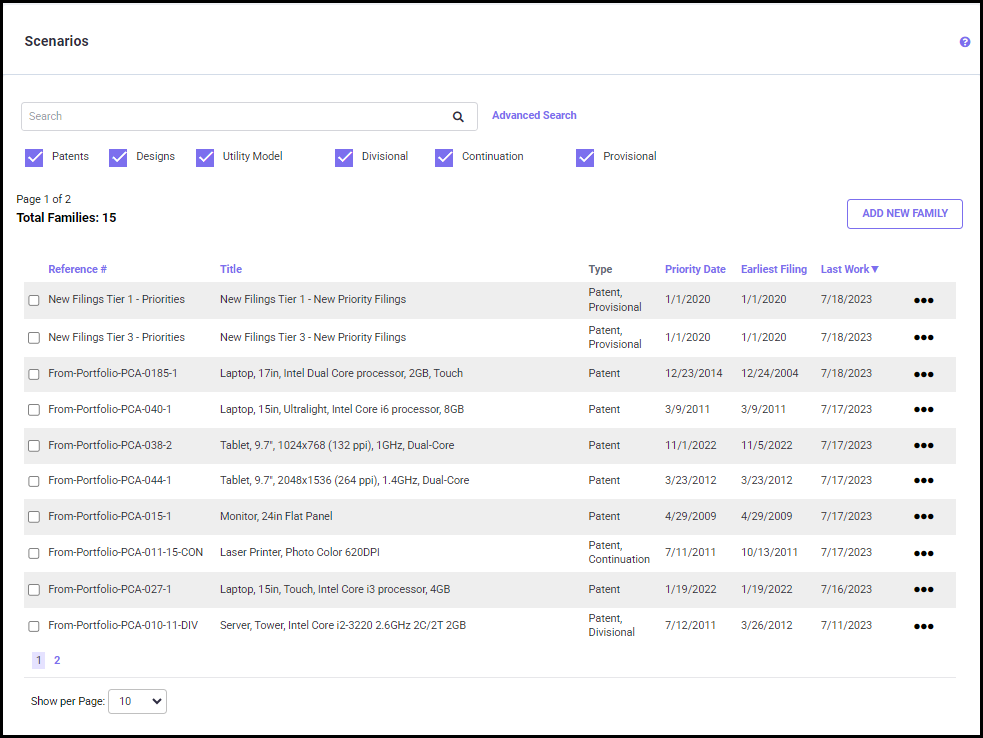
On the Scenarios screen, you can:
· Create a complete comprehensive budget by including totally new planned filings that have not yet started.
· Create what-if and/or one-off filing scenarios (patterns) without affecting your actual budget.
· Define custom filing strategies by plotting timelines and repeat patterns of your filing scenarios.
The Scenarios list displays the available families/subfamilies sorted by family/subfamily ID, Title, Priority Date, Earliest Filing Date, Application Type (e.g., Provisional, Design, Continuation, Divisional, or Utility Model), Date and Time of Last Update, and Initial Filing. To change the scenario list sort order, click on one of the headers (Family ID, Title, or Earliest Filing Date, etc.). Click again on the same header to toggle the sort between ascending and descending order.
The
Advanced Search option (1- shown below) helps you to easily drill down into your portfolio to find what you are looking for. There are various filters provided in the Advanced Search settings. You can filter the families by Family ID/Title, Groups, date range, Application Type, and other criteria to run specific pivot table reports. You can also save the defined settings for future use. For more information regarding how to use the advanced filters and save settings, see
Advanced Search.
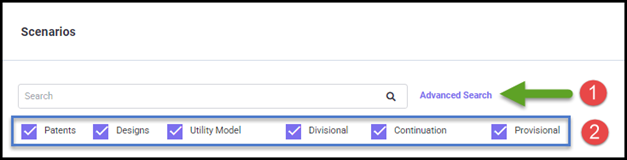
The Checkboxes below the "Advanced Search" area (2) help you to filter by application type. To filter, click the respective checkbox and the portfolio will show only the selected application type(s).
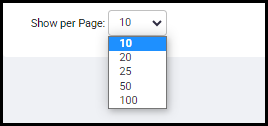
Using the “Show per Page” option, you can choose to view the number of families per page from 10 to 100 as per your convenience.
You can identify and select an existing family from your scenarios. There are several ways you can do this.
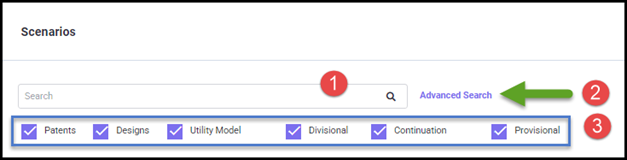
· You can limit the number of families displayed by searching on any part of the family ID or by searching on any part of the family Title. To do so, type your search criteria into the search box on top of the screen and click on the

icon (1). The search is not case-sensitive, and the search word can be found anywhere in the ID or title. For example, asking for any family containing the word ‘auto’, would list ‘Automotive’, ‘New Automatic’, etc. To see the entire list again, click on the
icon.
· By clicking the
Advanced Search link (2), you have a whole range of options to search by on the
Advanced Search screen.
· You can filter the application by Patents, Designs, Utility Model, Divisional, Continuation, and Provisional by checking/unchecking the respective checkboxes (3).
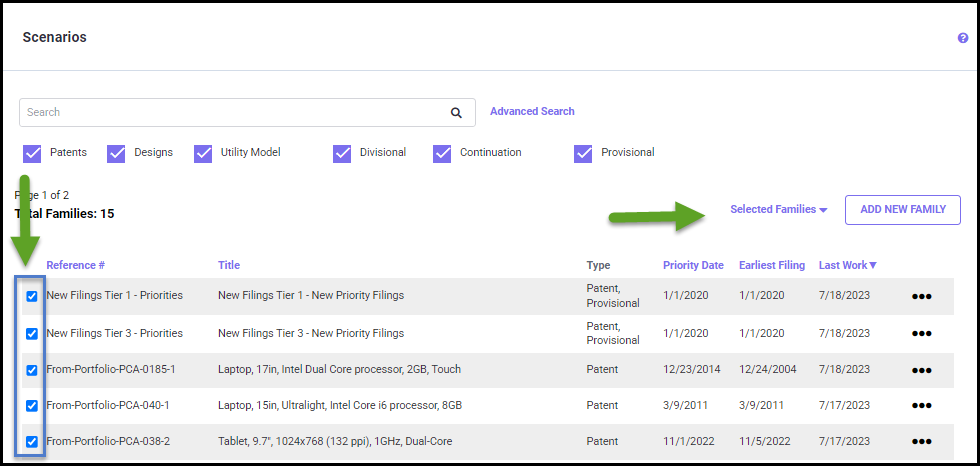
When you select families (or family) in the Portfolio screen using the checkboxes, the ‘Selected Families’ drop-down list appears.
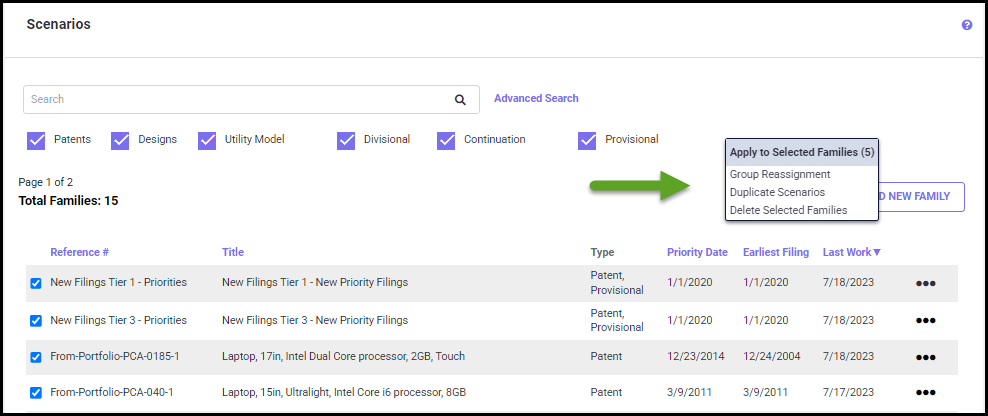
Group Reassignment
Clicking on the ‘Group Reassignment’ option from the list will lead you to the
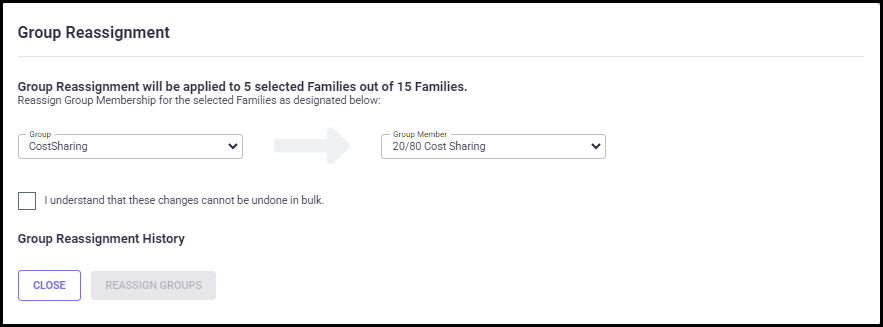
Group Reassignments pop-up screen (shown below), where you can reassign groups for the selected families. This feature is very useful in the budgeting and decision-making process since you can compare costs in families by reassigning groups with different projections (see the
Projected Filings sections for details) or gain visibility on the cost savings by reassigning groups with early abandonment defined (See
Early Abandonment).
Only Group Categories meeting certain criteria can be picked (see the details in ‘Reassignment of Groups’ section under Groups):
· Category cannot be a multi-group category.
· Category has the ʻAllow Group Re-assignmentʼ flag enabled (set via Groupsʼ screen).
The ‘Group Reassignment’ option allows you to change the Group Category and Groups assigned to the families using the ‘Group’ and ‘Group Member’ options. The number of families selected for reassignment is mentioned at the top (out of the total number of families in your portfolio). To reassign groups, select the Group and Group Member from the respective drop-down list. Click the "I understand that these changes cannot be undone in bulk" checkbox and click the REASSIGN GROUPS button to complete the group reassignment process.
Once you are done with the group reassignment, the ‘Group Reassignment History’ section lists all the families for which groups have been reassigned recently with details like Date, Username, Portfolio, Family ID, Title, Group, Old Group Name, New Group Name, and Cost Difference (shown below).
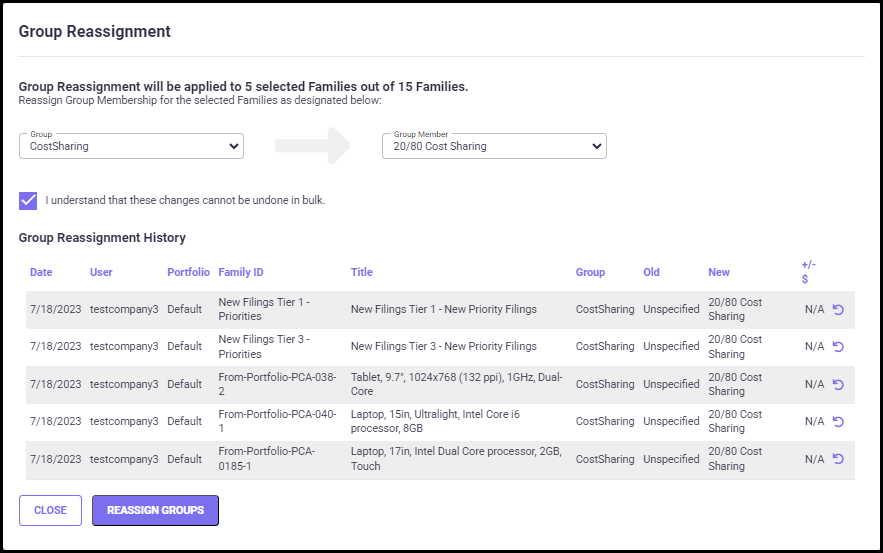
Using the

icon, you can undo the group reassignment for a single family.
The checkbox ʻAutomatically recalculate selected familiesʼ is checked by default, which allows your portfolio to be automatically recalculated during the group reassignment process.
Clicking CLOSE will close the ‘Group Reassignment’ pop-up screen and take you to the
Portfolio screen.
Duplicate Scenarios
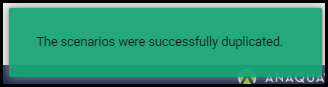
This option helps you to duplicate multiple scenarios from the selected families. Select the families using the checkbox. In the Selected families drop-down list, select the option "Duplicate Scenarios". You will receive notification once duplication is successful.
Deleted Selected Families
This option helps you to delete multiple families. To delete, select the families from the Portfolio screen using the checkbox. In the Selected families drop-down list, click "Delete Selected Families" and the following pop-up will appear.
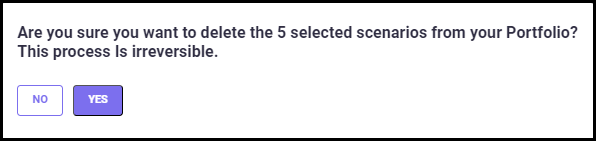
Confirm your selection by clicking YES. Once a family is deleted, it cannot be reverted.
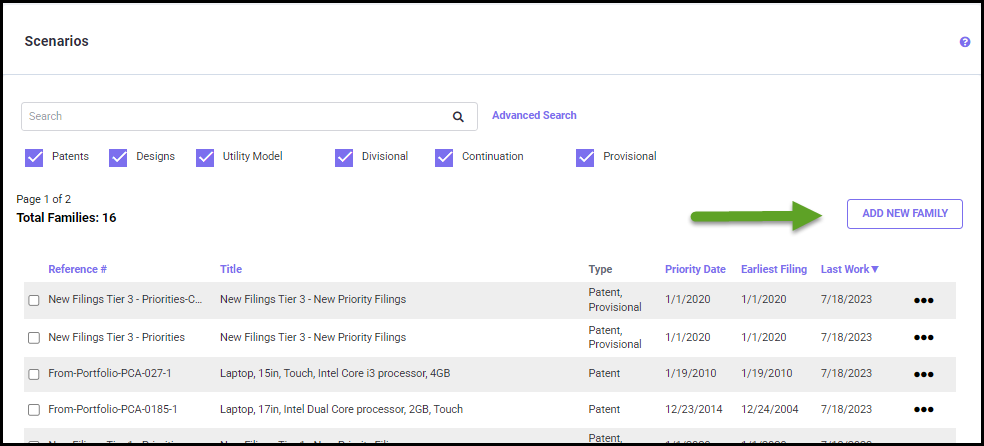
Instead of selecting an existing family, you may want to add a new family (Parent Application) to the portfolio. Click on the ADD NEW FAMILY button at the top right of the Scenarios screen and the New Patent Scenario screen will appear (shown below).
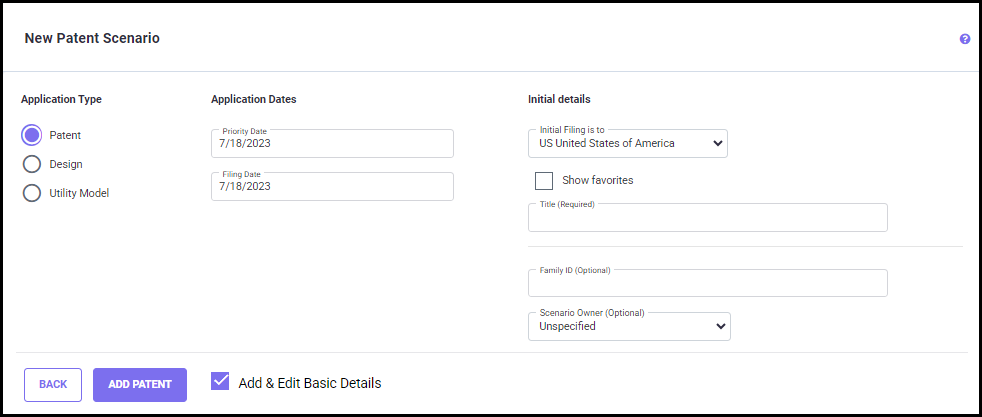
The New Patent Scenario screen appears, where you need to
1. Choose the Application type (Patent, Design, or Utility Model)
2. Enter Application Dates (Priority Date and Filing Date)
3. Specify country of initial filing
4. Enter a patent Title (required), and Family ID.
Using the Application Type option, you can choose to add a Patent, Design, or Utility Model application by selecting the respective radio button.
Initially, the Priority Date and the Filing Date will display the current date. You may change the dates manually in both the fields by entering a date in DD/MM/YYYY format.
Here you can choose the country of initial filing. If the “Favorite Countries” checkbox is checked, only countries you previously filed-to will show up in the selection.
The Family Title field is for entering the title (must be unique and less than 255 characters) used for the new patent family.
The Family ID field is a unique patent family identifier (less than 20 characters). The 'Auto-fill' checkbox on the screen is checked by default to increment the highest numeric saved. (For example, if the highest Family ID saved so far was 998, then this Family ID would be 999.) You may uncheck the ‘Auto-fill’ option and specify a different Family ID.
Adding countries to your scenario via different routes like Direct Nationals, PCT Nationals, and EPO Validations are discussed in detail in the
Adding Countries section.
To go back to the Scenarios screen without creating a new scenario, click on the BACK button.
Clicking on the ADD PATENT button will create the new scenario and take you to the Edit Basic Details screen. Note: Please enable the "Add & Edit Basic Details" checkbox to continue entering the additional patent information.
After selecting the family, clicking on the three-dots settings menu will open the following pop-up (shown below).
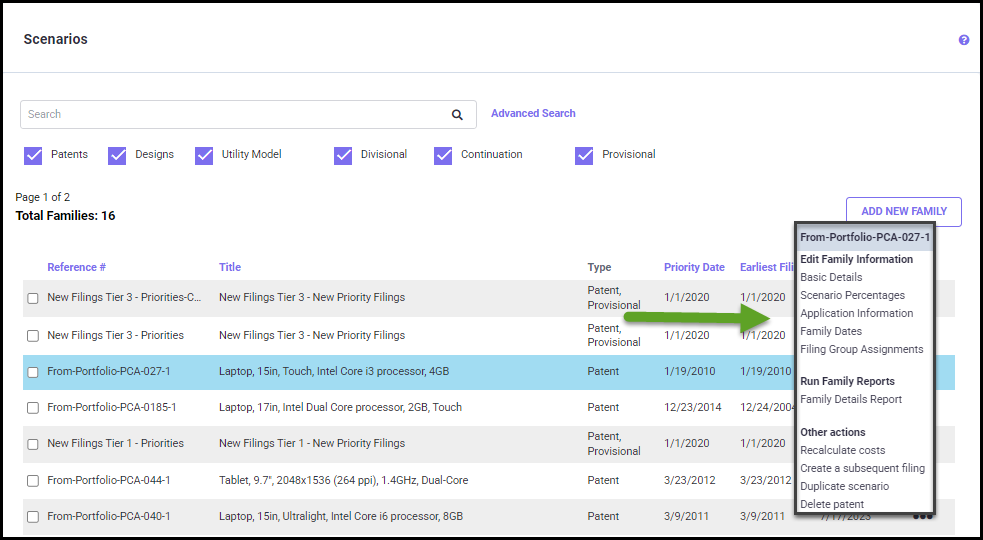
All the options for working with one family start from this screen, such as:
· Viewing or changing the basic data for the selected family.
· Calculating the costs and dates (or Family Dates).
· Viewing Family Details report.
· Recalculating cost for the selected family.
· Creating a subsequent filing.
· Duplicating a scenario.
This chapter describes how to view/edit family details using the options on the three-dots settings menu (shown below).
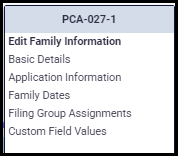
The Edit Family Information settings option allows you to edit the following:
EDIT BASIC DETAILS
The ‘Basic Details’ option on the three-dots menu leads to the following screen (shown below), which allows you to edit basic details of the selected scenario. The
Edit Basic Details screen allows for a variety of filing strategies via the combination of appropriate route and country lists. Some fields are already filled in because they were automatically initialized with values from an import process or from the
New Patent Scenario screen (discussed previously in the ‘
Add a New Family’ section) and/or were manually updated with subsequent editing. The following sections describe typical paths for setting up/editing a family with a multi-country filing.
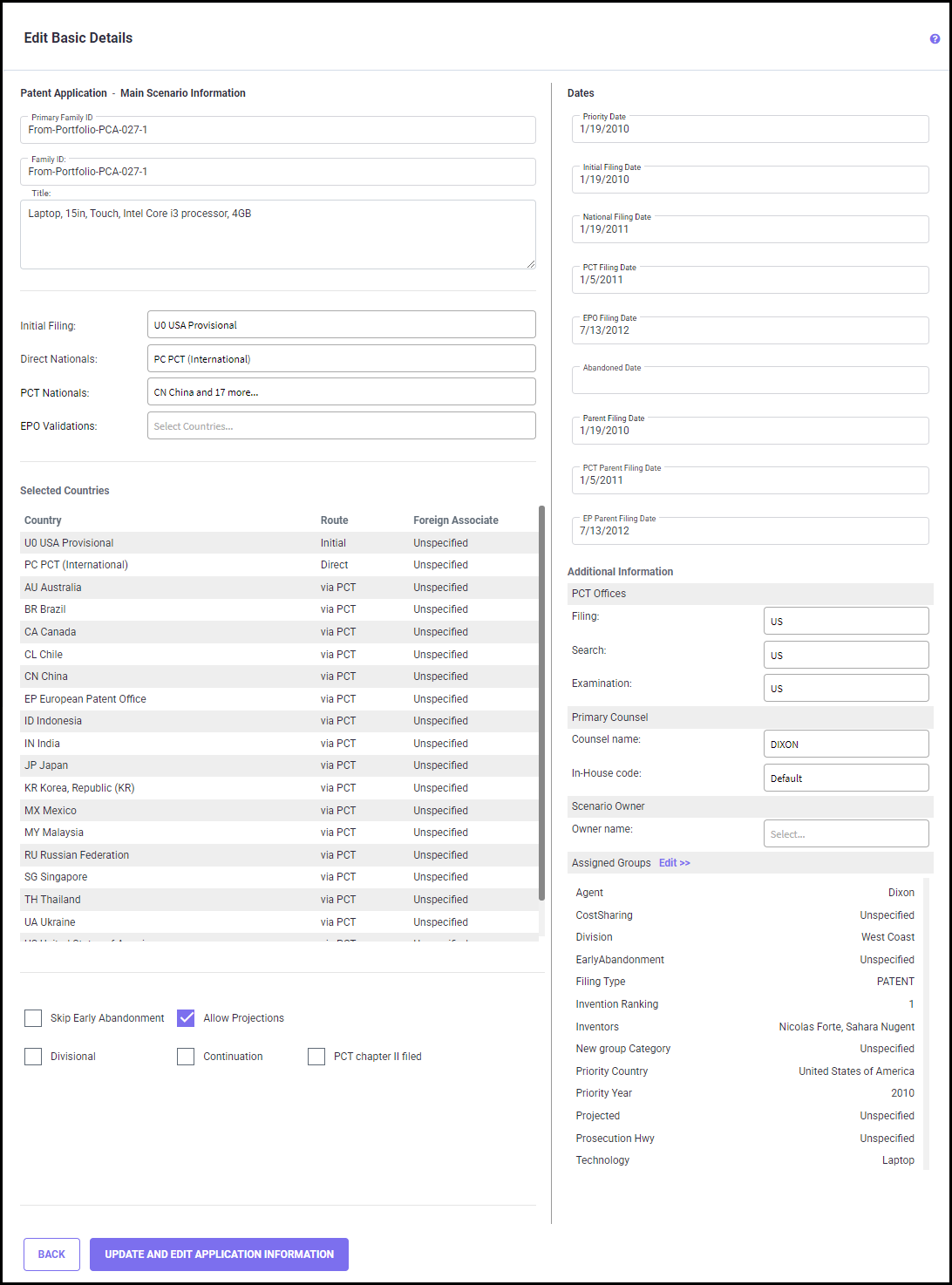
The Edit Basic Details screen shown above is used to enter or change the following ‘basic details’ concerning this family:
· Priority Date of family
· Initial Filing Date of application
· National Filing Date (filing date for direct filings)
· PCT/EPO Filing Date
· Abandoned Date (used to suppress costs for all countries at a certain point in time)
· Parent Filing Date (used by Continuation/divisional patent families)
· Country of Earliest Filing designated by drop-down list – Initial. (e.g. - the Country of Initial Application)
· Other countries connected to this family designated by route with drop-down list – Direct, PCT Nationals and EPO Validations
· PCT Offices used for the filing, search, and examination (if filing through the PCT)
· Groups associated with this family
· Primary Counsel prosecuting this family
· In-House Code assigned to this family
· Family information – the application type (Patent, Design or Utility Model), whether the family was imported or not, whether the family is a continuation/divisional or not, and whether PCT chapter II filed is applicable.
The Family ID, Family Title, Country of Earliest Filing, and all the dates contain the values given when the family was added to the portfolio (either through the Add New Family option or through a batch import process).
Specifying abandoned dates will exclude the costs that would occur after the Abandoned Date. These costs will then be excluded from the calculation and reporting process. The Abandoned Date field shown here applies to the entire patent family. To specify abandon dates for individual filings, use the ‘Family Dates’ option. For more information on abandoning individual filings, see Family Dates.
Note: You cannot enable both continuation application and divisional application checkboxes in a patent family. If you try to enable both checkboxes, only the most recently enabled checkbox will be active.
Country Selection
To select/update the filing countries, use the drop-down list next to the route (such as Initial Filing, Direct Nationals, PCT Nationals, and EPO Validations). To select one or more countries from the drop-down list, highlight the countries you wish to include (Shown below).
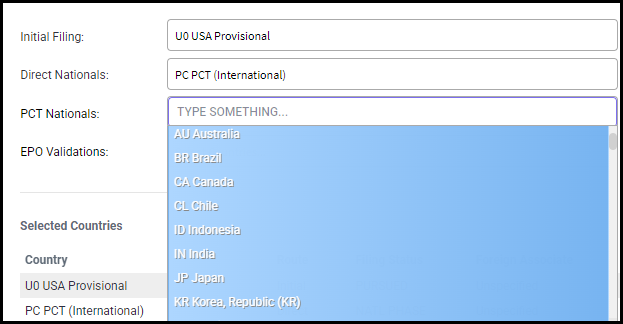
You can see the summary of countries selected under "Selected Countries" with their filing status and Foreign Associate. To Edit/update the Filing Status and Foreign Associate information, click on the country you wish to edit.
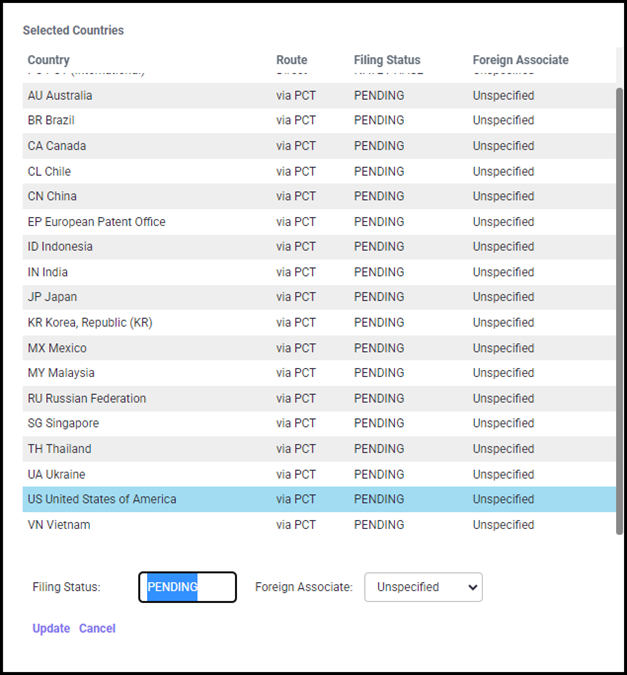
You can manually change the Filing Status in the text area next to it. You can also update the Foreign Associate from the drop-down list. Once you have made the changes, click Update to save the changes.
PCT Offices
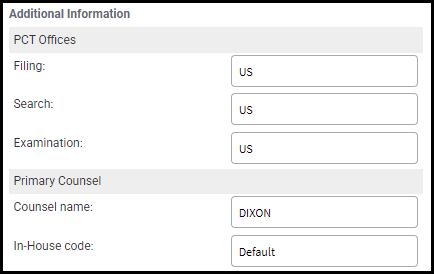
The current PCT Offices settings (shown below) are displayed in the Additional Information section of the screen.
The calculation of a PCT application is affected by where the search and examination will be performed. Likewise, the fees associated with sending a completed PCT application to the receiving office also varies by the Patent Office.
Initially, these PCT Receiving, Search, and Examination offices are set to the user-specified defaults. To change one of these offices, click on the appropriate drop-down list and select a desired country. Based on the Receiving Office selected, the ‘International Search Authority’ and the ‘International Preliminary Exam Authority’ list boxes will display the relevant offices.
Primary Counsel
In the Additional Information section of the screen, the Counsel name and the In-House code for the family are displayed under the Primary Counsel section (shown above).
To change the Counsel name and/or the In-House code for the family, click on the appropriate drop-down list and select the name or code from the list.
Assigned Groups
When running a portfolio cost analysis, it is sometimes helpful to see the data in the reports grouped (i.e., totaled and charted) in certain ways (for example, by division, technology, and/or manager). Groups can be assigned at the Family level using the ‘Assigned Groups’ option on the Edit Basic Details screen or at the Filing level using the ‘Filing Group Assignments’ option on the three-dots menu of the Portfolio screen.
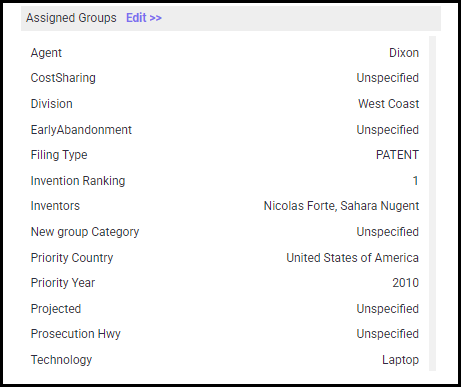
To change any of the groups, click on the Edit >> link next to the Assigned Groups section. The Group Assignment pop-up screen appears (shown below). Group Categories are listed on the left side of the screen and Groups under each Category are listed on the right with a drop-down arrow provided to see and select the desired Group. Use the down arrows to change the group assignment for a Group Category.

The group definitions may be specified via the
Groups Definitions screen and are discussed in detail in the
Groups section.
Once you have updated the basic details for the selected family. Click on the "UPDATE AND EDIT APPLICATION INFORMATION" button to save the changes and go to the Patent Application Information screen.
Click BACK to go to the Scenarios screen without saving the changes.
SCENARIO PERCENTAGES
There are two places where cost factor percentages can be assigned for a Scenario:
1. Country specific filing expectancy percentage defined on the Scenario Percentage screen of a Scenario.
2. Filing expectancy percentage for a route in the Scenario, defined under the Edit Scenario Filing Details screen for a Strategy (shown below).
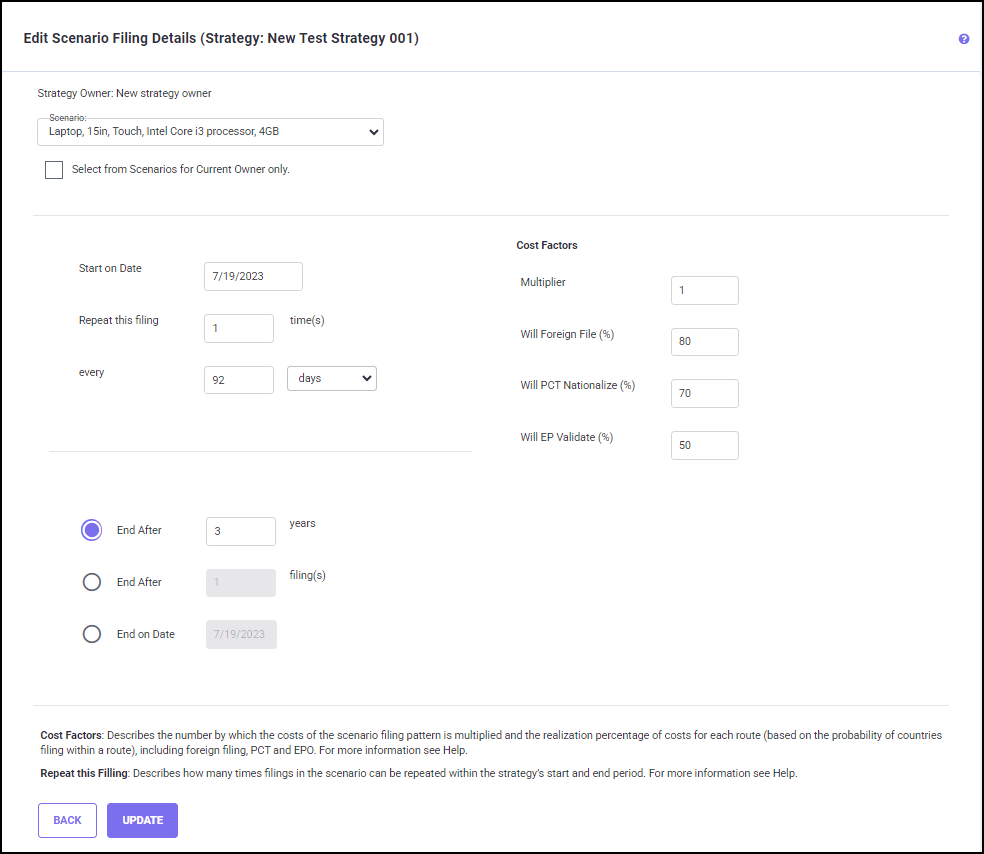
It is important to know about both because should a cost factor (percentage of time a country will file) be assigned to a specific country in Scenario Percentage and also be assigned per route (within which the same country is defined) in the Scenario Filing Details of a Strategy, then the cost factors for this country will be multiplied by both percentages, thereby reducing the expectancy percentage too much. The Scenario Percentages Report (under the Reports Menu) helps you in reviewing these cost factors defined in both the Scenario and in the Strategy calling that Scenario, so that the overall expectancy percentage may be calculated and changed if required.
The ‘Scenario Percentages’ option leads you to the Scenario Filing Percentage screen, where you can specify a cost factor percentage per individual countries in the Scenario.
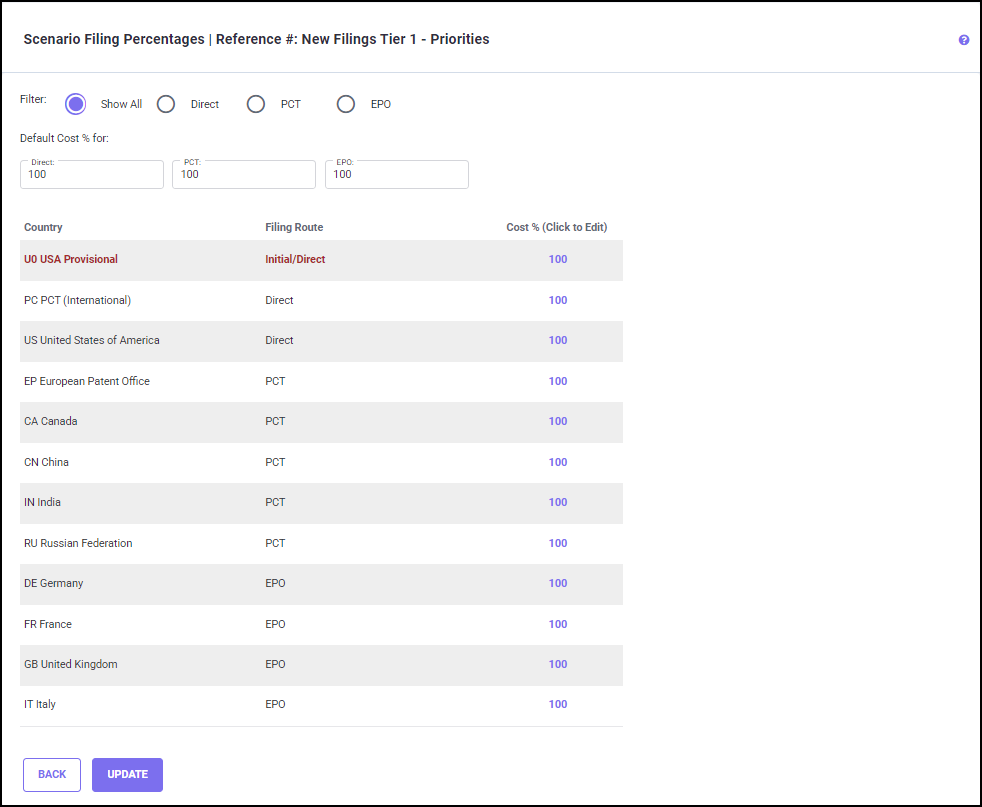
On selecting a route on this screen, the countries previously defined for that route in the Scenario will appear in the ‘Countries’ box. You can customize your scenario by specifying a percentage of time that the countries will file within that route. You can either define a default cost percentage common to all countries in the route by entering a percentage value in the ‘Default Cost % for Direct/PCT/EPO Filings’ field, or you can define individual cost percentages for each country in the route by clicking on the country name in the ‘Countries’ list and defining a value in the ‘Cost % for Country’ field that appears (as shown below).
Clicking on the button for a country (with percentage value other than default value for a route) will change the value to the default value.
Note that the percentages can range past 100%. Continue to select each route as needed to customize the cost factor percentages for countries as needed.
APPLICATION INFORMATION
The Application Information Settings allow you to enter the application-specific information that affect costs such as the number of pages in the application, the number of pages of drawings, the number of claims, etc., for the initial filing, and the national applications filed through various routes (Direct, PCT or via EPO).
1. A screen for the General family default (For countries without custom values),
2. A Country-specific application information screen for all the filings routes (Direct, PCT or via EPO).
Based on the application type and destinations you have selected for the filings; various attributes of the application will automatically be selected and will appear in one of several Patent Application Information screens. Initially these screens will have system/user defined default values entered for your convenience, which you can edit as per your requirement.
Family Defaults
In the Patent Application Information screen, "Family defaults" is the first option, here you can edit general information common to all countries/destinations.
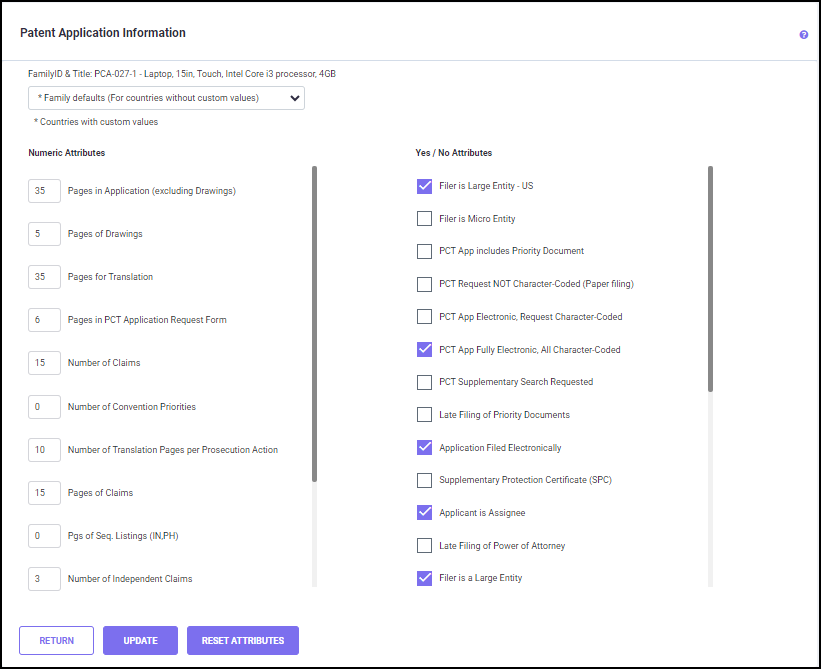
Attributes (for example, Pages in Application (excluding Drawings), Pages of Drawings, Number of Claims, etc.) are listed on this screen. The Value fields require Numeric or Yes/No values.
· Numeric information is entered into the Value fields on the left side of the screen.
· Yes/No information is entered into the Value fields on the right by enabling/disabling the checkbox.
Through the drop-down list at the top, you can navigate to the initial application or country specific application information screen (shown below).
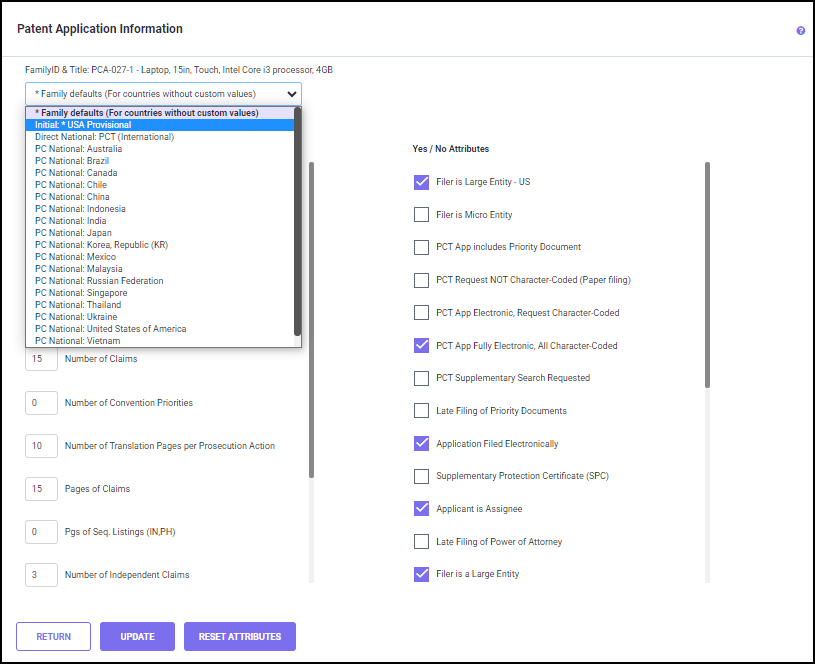
Initial Application
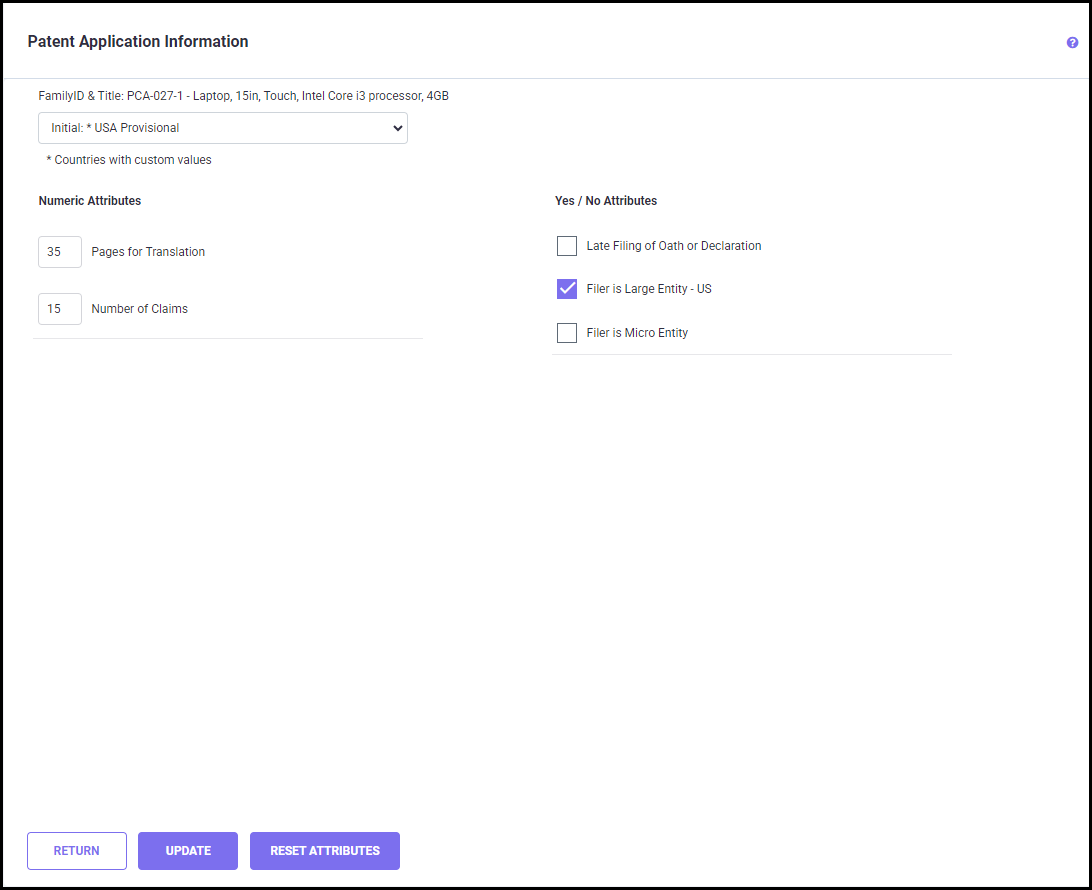
Country-Specific Application Information
You may also enter Application Information for a specific country that is different from the ‘Family defaults’ information used for all countries. To do so, select the country you wish to edit (Direct, the PCT or EPO) from the drop-down list. This displays another Application Information screen (shown below) for the selected country. After entering information, click UPDATE to save the changes. The countries with user-defined application information values are marked by a star prefix in the list.
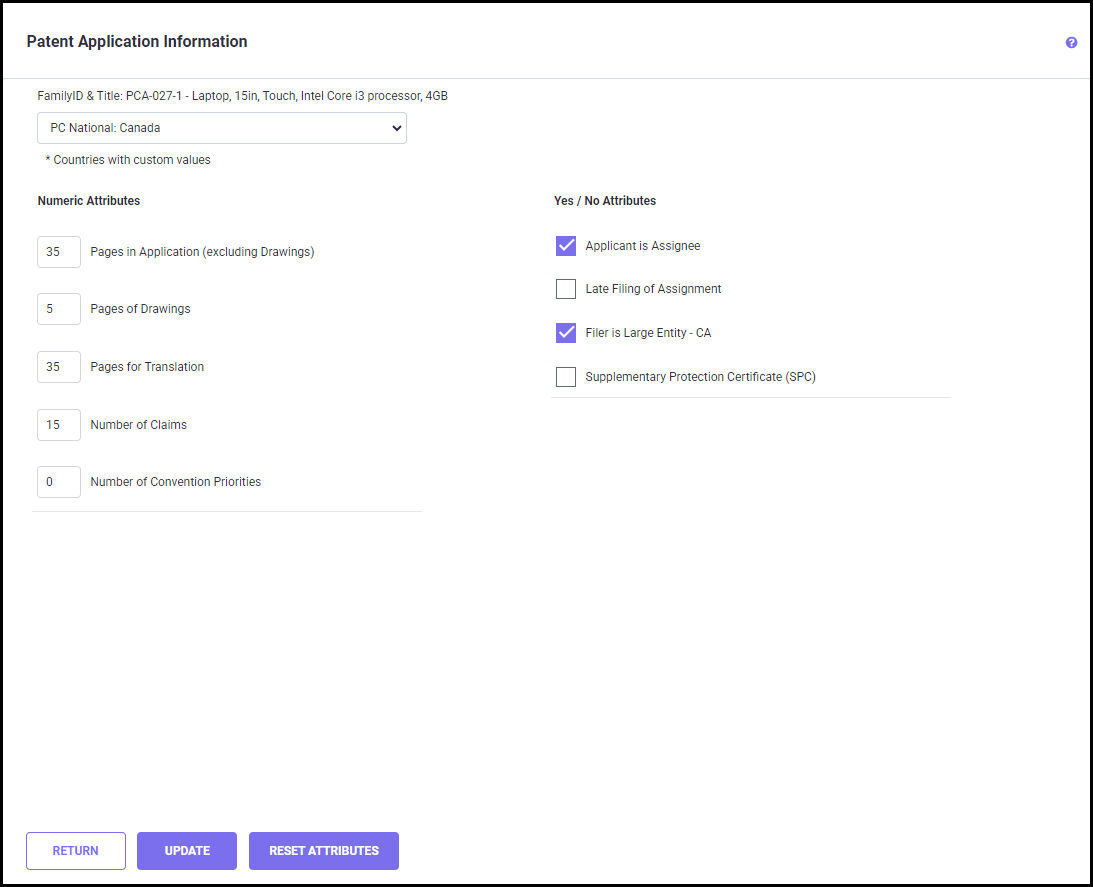
Once you have made changes to attributes, click UPDATE to save the changes.
To remove a user defined value for a country, select the country from the drop-down list and click RESET ATTRIBUTES. The custom values will be reset to default values.
Clicking RETURN will take you back to the Portfolio screen without saving the changes.
APPLICATION DATES
Use the Application Dates option to change dates in the patent family.
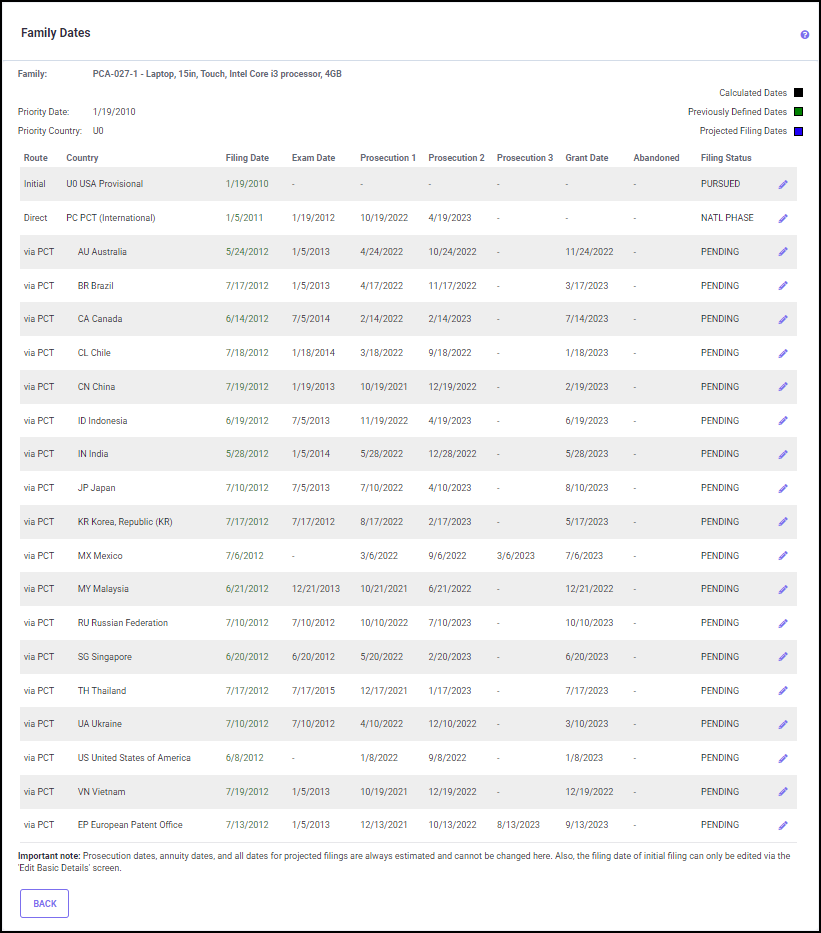
For example, after reviewing some of the reports, you may decide that the Grant process for a particular country will take 6 months more (or less) time. As this may affect costs in your estimates, you may want to enter the new date, recalculate, and see the different effects in the new reports. This and other modification of the dates for the filings in the family is possible using the Family Date screen. Additionally, you can enter the Abandoned dates and filing status of your patent application/patents in particular countries. The costs that would occur in those countries after the Abandoned date specified on this screen will then be excluded from the calculation and reporting process.
The dates on this screen are categorized into three types and colored. There is a color key in the upper right corner on the screen. As noted on the screen, dates that were previously defined by a user or from the import file are displayed in green and red. Dates that you change on this screen are also displayed in green. Dates that the program calculates (estimates) are displayed in the color black. Any filings based on projections will show up on this screen in blue.
Using the edit icon to open the pop-up screen, you can update the dates (such as Filing, Exam, Grant, and Abandon Date) as well Filing Status. Clicking on an existing date or an empty cell will cause a calendar to appear. Using the calendar, you can enter, delete, or change the date.
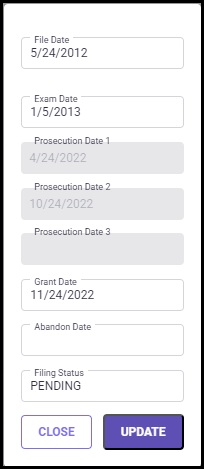
The filing status of each filing in the selected family can be modified by updating the text in the status/empty cell.
Once you have updated the filing date and/or Filing Status, click UPDATE to save and return to the Family Dates screen.
Clicking CLOSE will exit the pop-up screen without saving any changes.
FILING GROUP ASSIGNMENT
When you select the ‘Filing Group Assignments’ option from the three-dots menu, the following screen appears.
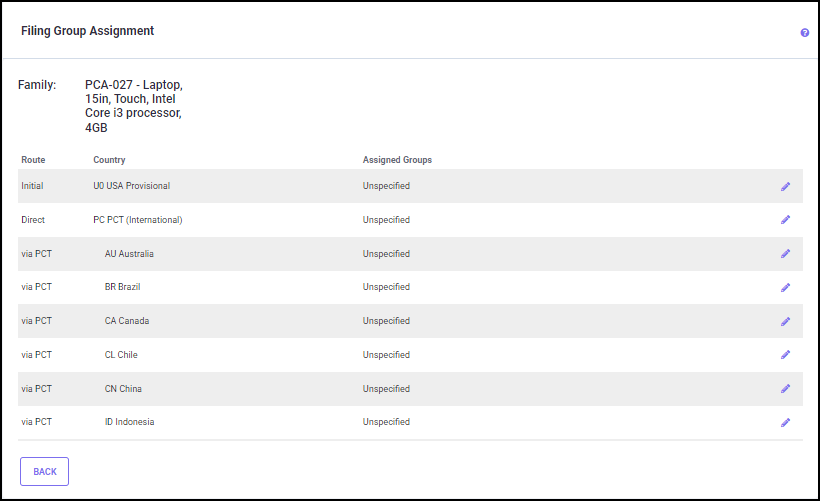
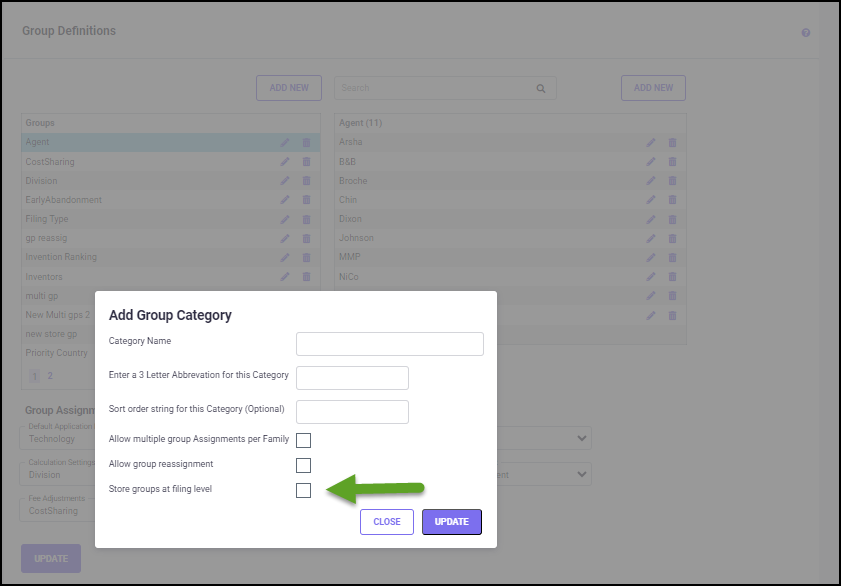
The Edit Filing Group Assignments setting is enabled and appears on the three-dots menu of each family in the Portfolio screen only when you have different groups assigned for each filing in a family in your import data and have enabled the ‘Store groups at filing level’ for a Group Category under the Groups through the import process or have manually added a new Group category with the ‘Store groups at filing level’ option enabled (shown below).
On the Filing Group Assignment screen, you can assign a different group (under a Group Category with ‘Store groups at filing level’ enabled) for each filing in the family using the ‘Assigned group in selected category’ drop-down list.
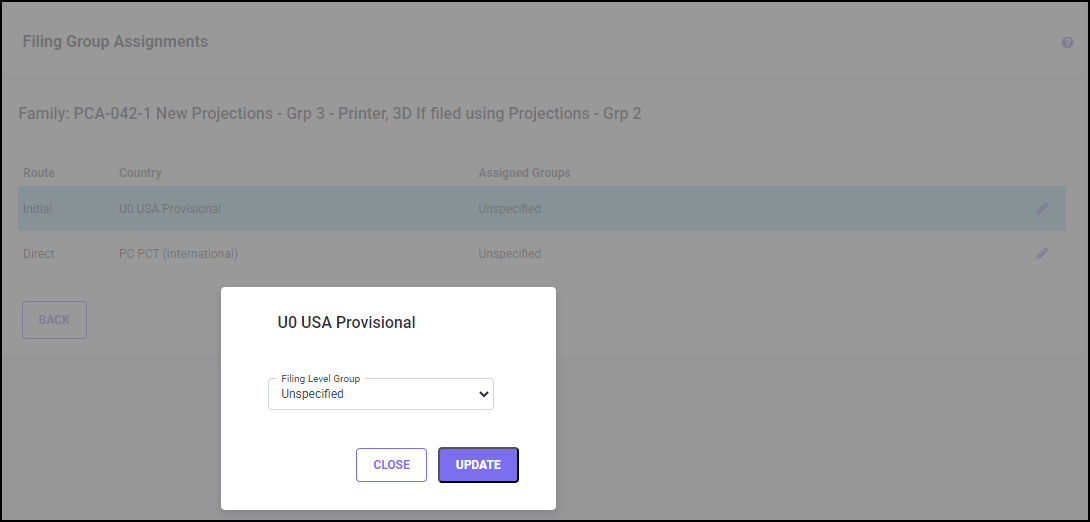
Click on the UPDATE button to save the changes made on this screen. Click CLOSE to exit from this screen without saving the changes.
Family Details Report
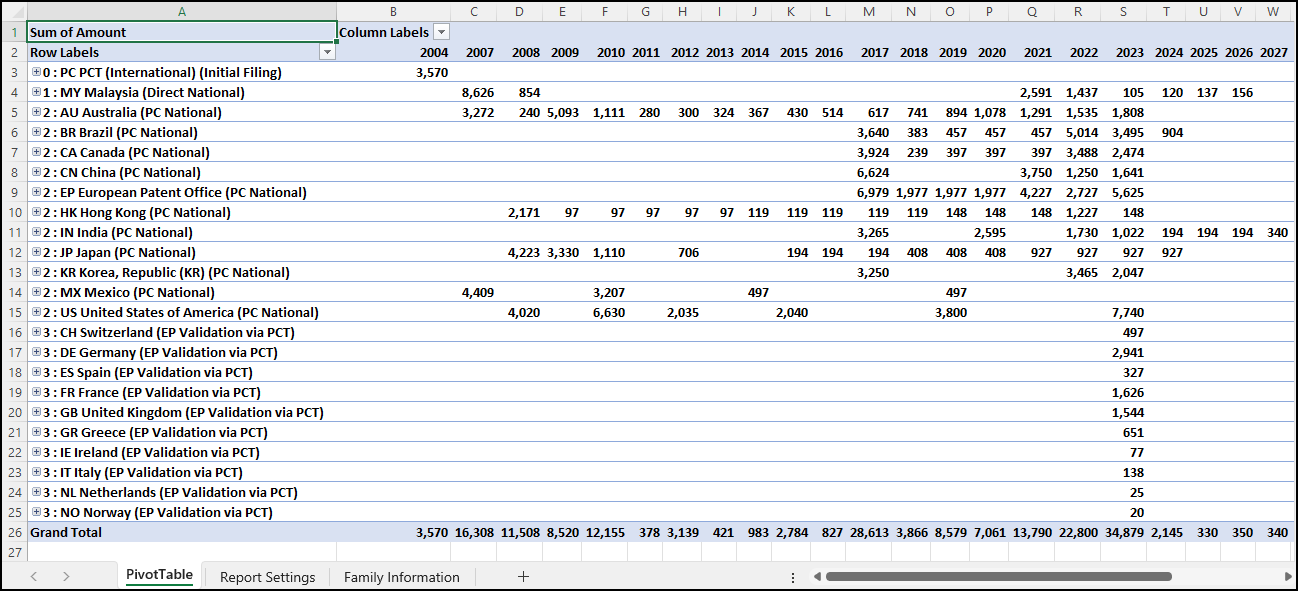
The ‘Family Details Report’ option creates a report in MS Excel spreadsheet format, with costs itemized for each patent application (approximately one report page per country). The Family Details report will show the date of the report, the page number, the Scenario Title, followed by the stage and category cost estimates for that country. Stages include Filing, Examination, Prosecution, Granting, and/or Maintenance. Categories include official fees, associate charges, and/or translation costs. The maintenance fee estimates are displayed at the bottom of the report page (shown below).
Once you click the Family Details Report option from the three-dots menu, this will initiate the calculation and you will be directed to the Download Reports screen, where the generated Family Details Report is ready for download.
OTHER ACTIONS
The following four options are available under ‘Other actions’.
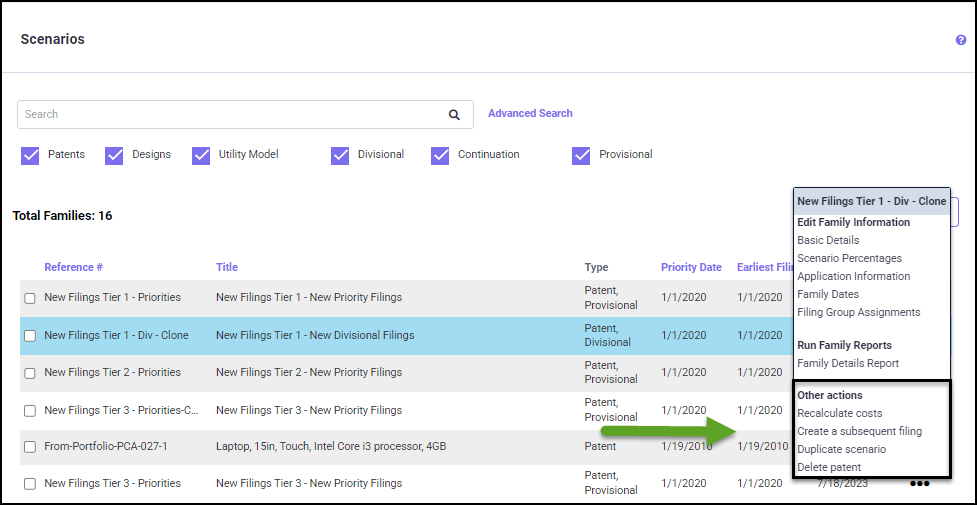
Recalculating Costs
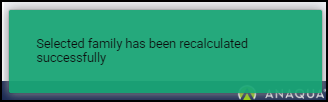
When you select the Recalculate Costs option from the three-dots menu, the patent costs will be re-calculated for the selected family and when it is done, a notification will appear at the bottom right corner of the screen (shown below).
To recalculate the entire portfolio, see
Recalculate Portfolio. While the time needed to calculate one individual patent family may only be a few seconds, the amount of time can be significant when recalculating an entire portfolio. Therefore, this option is very useful if you quickly want to see the effects of updates/Edit menu changes in the estimate report for a particular family.
Creating a Subsequent Filing
When you select a patent family and click this option from the three-dots setting menu, the following screen appears.
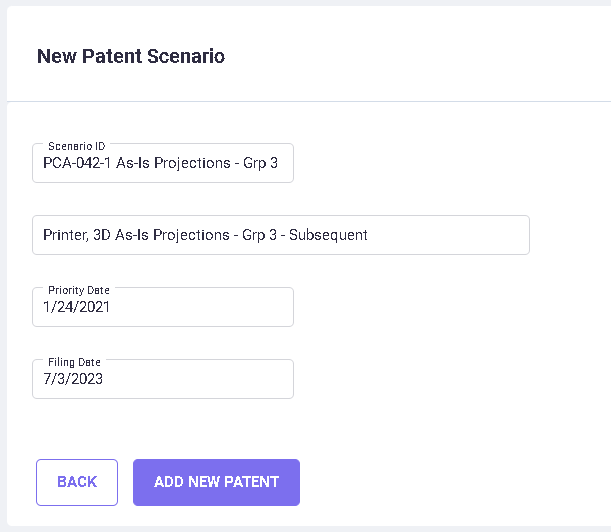
In the New Patent Application screen, the Application ID, Title, and Priority Date are copied from the Parent application (family selected on the Portfolio screen). The Filing Date is the date when the subsequent application is created. The Application ID will have an "S" at the end to denote subsequent filing. Clicking on the ADD NEW PATENT button creates a subsequent application and a notification appears at the bottom of the screen (shown below).
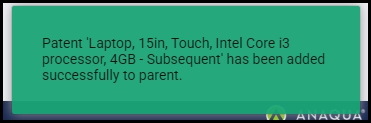
Once the Subsequent application is created, you can update the necessary information (such as filing countries, route, application type, group assignments, PCT offices, Primary counsel, attributes, and family dates etc.,) by selecting the newly created family from the Portfolio screen.
Click BACK to return to the Portfolio screen.
Duplicate Scenario
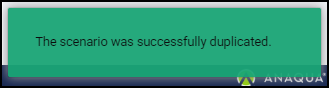
This option helps you to duplicate multiple scenarios from the selected families. Select the families using the checkbox. In the Selected families drop-down list, select the option "Duplicate Scenarios". You will receive a notification once duplication is successful.
Deleting a Patent Family
The Delete Patent option from the three-dots menu helps you to delete a Family. To delete, select the family from the Portfolio screen and click the three-dots menu icon. Now, click "Delete patent" on the list and the following pop-up will appear.
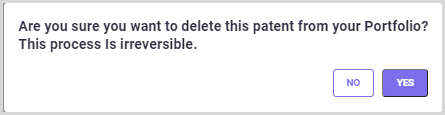
Confirm your selection by clicking YES. Once a family is deleted, it cannot be reverted.